
By Sam Halberstadt · Reviewed by Marina Chen
Editor · USCG-licensed Master 50 GT · Updated May 6, 2026
Some links on this page are affiliate links — we may earn a small commission at no extra cost to you. We only recommend gear we'd use ourselves. Read disclosure.
How we tested
Display quality in direct sunlight — a chartplotter you can't read at noon is a $1,500 paperweight.
Chart subscription cost over 5 years (this dwarfs the hardware cost over time).
Integration with sonar, AIS, radar, and autopilot — proprietary networks (Garmin Marine Network, Raymarine SeaTalk NG, B&G CZone) lock you in but work better than NMEA 2000 alone.
Reliability based on user reports across cruising forums and our own units' uptime.
UI usability — number of menu taps to mark a waypoint, plot a route, set an alarm.
Screen size and the boat-size rule
Under 22 ft: 7-inch unit ($800–$1,200). Bigger screens just don't fit at the helm.
22–32 ft: 9-inch unit ($1,200–$1,800). Sweet spot for visibility vs price.
32–45 ft: 12-inch or two networked 9-inch units ($2,000–$3,500). Split screen for chart + sonar + radar.
Over 45 ft: 16-inch primary at the helm + 9-inch repeater at nav station, all networked. Budget $5,000+.
Brand differentiation
Garmin GPSMAP series: best-in-class display, intuitive UI, large dealer network, ActiveCaptain community data integrated. Charts via BlueChart g3 (one-time purchase) or Navionics (annual subscription).
Raymarine Axiom+: RealVision 3D sonar is genuinely useful, LightHouse charts are excellent and free for US waters, integrates with FLIR thermal cameras.
B&G (Navico): clearly the best for sailors. SailSteer overlays apparent wind, true wind, laylines, and tactical data. Forward-scan sonar (ForwardScan) shows depth ahead of the boat — invaluable in unfamiliar shallow water.
Furuno: workhorse commercial-grade gear. Slower UI, dated screens compared to Garmin/Raymarine, but bulletproof reliability and the best radar in the industry.
Chart subscription costs (the hidden expense)
Navionics+ subscription: $80–$130/year. Auto-updates, sonar overlay, community edits.
Garmin BlueChart g3: ~$200 one-time per region, lifetime updates included for the first three years.
Raymarine LightHouse: free for US, Bahamas, parts of the Caribbean. Premium subscription ($30/year) adds streets, marinas, hazards.
C-MAP (Navico/B&G): subscription model, $130–$200/year for full coverage.
Networking, autopilot, and N2K vs proprietary
NMEA 2000 is the universal backbone — every modern chartplotter speaks it, plus engines, sensors, AIS, and most autopilots. A standard N2K trunk with T-connectors and drop cables is plug-and-play and lets you mix brands.
Proprietary networks (Garmin Marine Network, Raymarine RayNet/SeaTalkNG, Navico Ethernet) carry high-bandwidth data — radar overlay, sonar imagery, video, multi-display chart sharing — that NMEA 2000 cannot. Mix-and-match across brands works for basic data; radar and sonar imagery require staying within one ecosystem.
Autopilot integration is the killer feature for cruisers: the chartplotter sends route waypoints directly to the autopilot computer, which steers track-to-track. Garmin Reactor, Raymarine Evolution, and B&G NAC autopilots all integrate cleanly within their own ecosystem; cross-brand integration via NMEA 2000 works for basic heading/track but loses advanced features like wind-driven sail steering.
Our picks
 Editor's pick
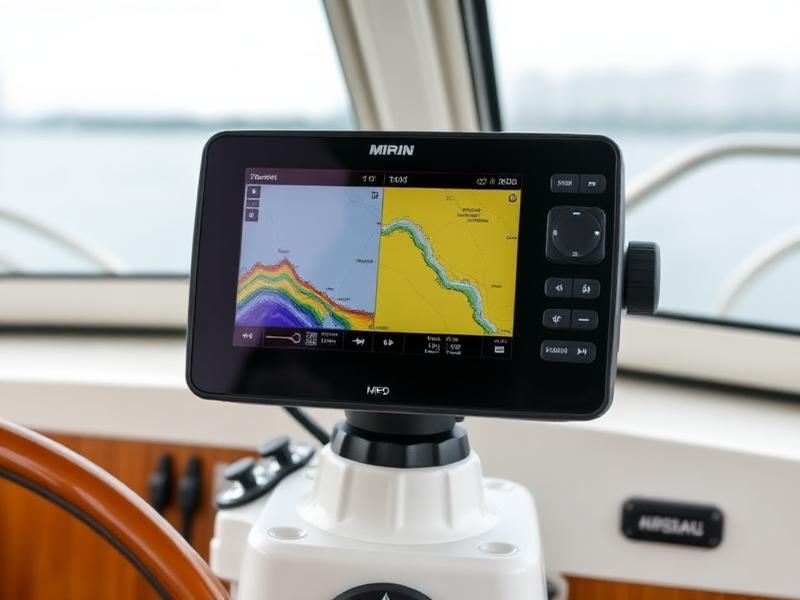
Garmin GPSMAP 943xsv
$1,799
- Bright sunlight-readable display
- Built-in CHIRP sonar
- Excellent UI
- ActiveCaptain integration
- 9-inch sweet spot
- Garmin-only ecosystem
- BlueChart upgrade extra
Raymarine Axiom+ 9 RV
$1,599
- RealVision 3D sonar built in
- LightHouse charts free for US
- Wireless integration with apps
- Great touch UI
- Steeper learning curve than Garmin
B&G Vulcan 9 FS
$1,449
- Best for sailors (SailSteer, laylines)
- ForwardScan sonar shows depth ahead
- Touchscreen + buttons
- Auto-routing
- Power-boating features less polished
- C-MAP subscription
Frequently asked
Annual updates are incremental. If you need one this season, buy now — feature creep is real but rarely game-changing year over year.
