By Sam Halberstadt · Reviewed by Marina Chen
Editor · USCG-licensed Master 50 GT · Updated May 6, 2026
Anchoring well is the difference between sleeping through the night and standing watch in your underwear at 0300. The good news: it's a five-minute physical skill backed by ten minutes of decision-making. This pillar is the complete reference — anchor types and what holds them, how to read a chart for bottom composition, the math of scope and chain catenary, the seven-step technique that sets a hook on the first try, and the anchor watch routine that catches a drag before you're on the rocks.
Anchor types and what each one is for
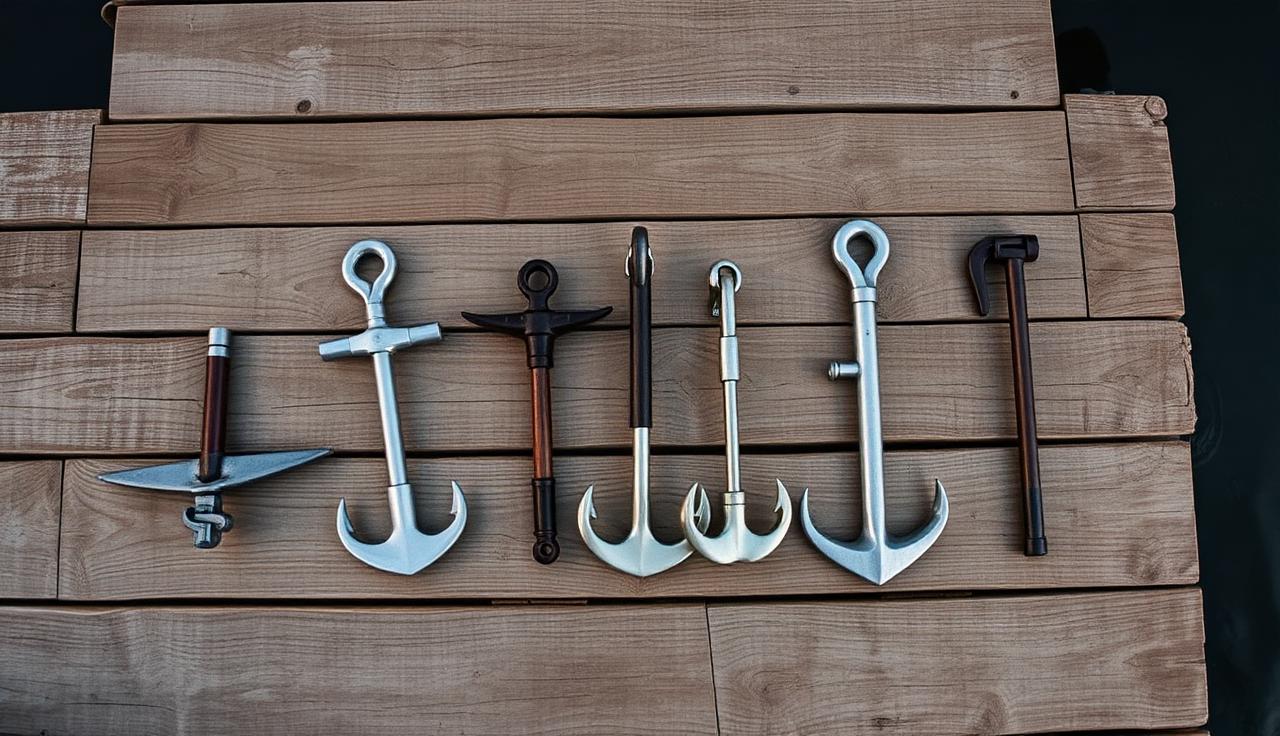
Modern scoop anchors (Rocna, Mantus, Spade, Ultra) set fast and reset themselves if the wind shifts — they've replaced the CQR plow as the default cruising primary. Fluke anchors (Danforth, Fortress) are unbeatable in soft mud and sand but skate on weed and rock. Plow anchors (CQR, Delta) still hold well but are slower to set. Mushroom and grapnel anchors are mooring or dinghy-only. Match anchor to bottom, then upsize one number from the manufacturer chart — those charts assume calm conditions.
Reading the bottom from the chart
Charts mark bottom composition with two-letter abbreviations near soundings: S (sand), M (mud), R (rock), G (gravel), Co (coral), Wd (weed/grass), Sh (shells), Cl (clay). Sand and mud hold best. Rock catches anchors but doesn't truly hold. Grass is notorious for skating modern scoop anchors — drop in a sand patch even if it's smaller. Use the latest NOAA ENC chart or Navionics SonarChart Live to spot bottom changes that paper charts miss.
Scope: 5:1, 7:1, and the chain catenary effect
Scope is the ratio of rode out to total water depth at high tide plus your bow freeboard. Standard ratios: 5:1 daytime calm, 7:1 overnight, 10:1 in heavy weather. The catch: ratios assume an all-rope rode with the pull right at the anchor shank. All-chain rode forms a curve (catenary) that keeps the pull horizontal and effectively buys you 1–2 ratio numbers; many cruisers run 5:1 all-chain for normal overnighting. The math: 12 ft high water + 4 ft freeboard = 16 ft × 7 = 112 ft of rode out.
The seven-step setting procedure
1) Survey: chart for bottom and depth, sweep the anchorage for swing room. 2) Approach into the wind at idle and stop directly over the spot. 3) Lower (don't drop) the anchor as the boat drifts back — never let chain pile on the anchor. 4) Pay out scope as you drift, marking rode in 25-ft increments. 5) Snub the line on the bow cleat once full scope is out. 6) Back down at 1500 RPM for 15–30 seconds. 7) Take a transit on two fixed shore points; if the bearings don't change, you're set. Set the chartplotter anchor alarm at 30 ft.
Anchor watch and what to do when you drag
Set the chartplotter anchor alarm to a 30 ft radius. Add a backup phone app (Anchor Pro, Drag Queen) running in the cockpit. Best of all is a transit — two fixed objects on shore lined up. Walk the deck every couple of hours and re-check. If you drag: don't try to 'see if it'll grab' downwind. Pull up immediately, motor to a fresh patch, and re-set. Re-anchoring at 0300 is annoying; re-floating off rocks is expensive.
When two anchors are better than one
Bahamian moor (two anchors 180° apart) cuts swing radius in half — useful in tight, current-driven anchorages. Tandem (V-formation) doubles holding power for storms. Forked moor (two anchors 30–45° off the bow) gives wind-shift insurance but tangles in 360° wind shifts. Don't deploy two anchors casually — recovery is twice as much work.
Some links on this page are affiliate links — we may earn a small commission at no extra cost to you. We only recommend gear we'd use ourselves. Read disclosure.
Cluster articles
More in Anchoring
 Anchoring
How to Anchor a Boat: The Complete Step-by-Step Procedure
The full procedure from approach to set check, with the small mistakes that cause overnight drag.
 Anchoring
Best Boat Anchors in 2026 (Tested in Mud, Sand, and Grass)
Tested across mud, sand, and grass over two seasons. The picks that held — and the brand-name failures.
 Anchoring
Anchor Scope Ratio Explained: 5:1, 7:1, and the Catenary Math That Matters
Scope ratios broken down with the chain catenary effect most calculators ignore.
Frequently asked
At minimum 7× the deepest water you plan to anchor in, plus 50 ft of buffer. Most coastal cruisers under 35 ft carry 200–250 ft total — a 30-ft chain leader plus 200 ft of three-strand nylon is the typical setup. Bluewater cruisers run all chain (300+ ft).