By Sam Halberstadt · Reviewed by Marina Chen
Editor · USCG-licensed Master 50 GT · Updated May 6, 2026
Fixed-mount vs handheld
Fixed-mount VHFs output 25 watts and reach roughly 25 nautical miles in good conditions. The antenna is mounted high (mast or arch), which matters more than the wattage — VHF is line-of-sight, so antenna height drives range.
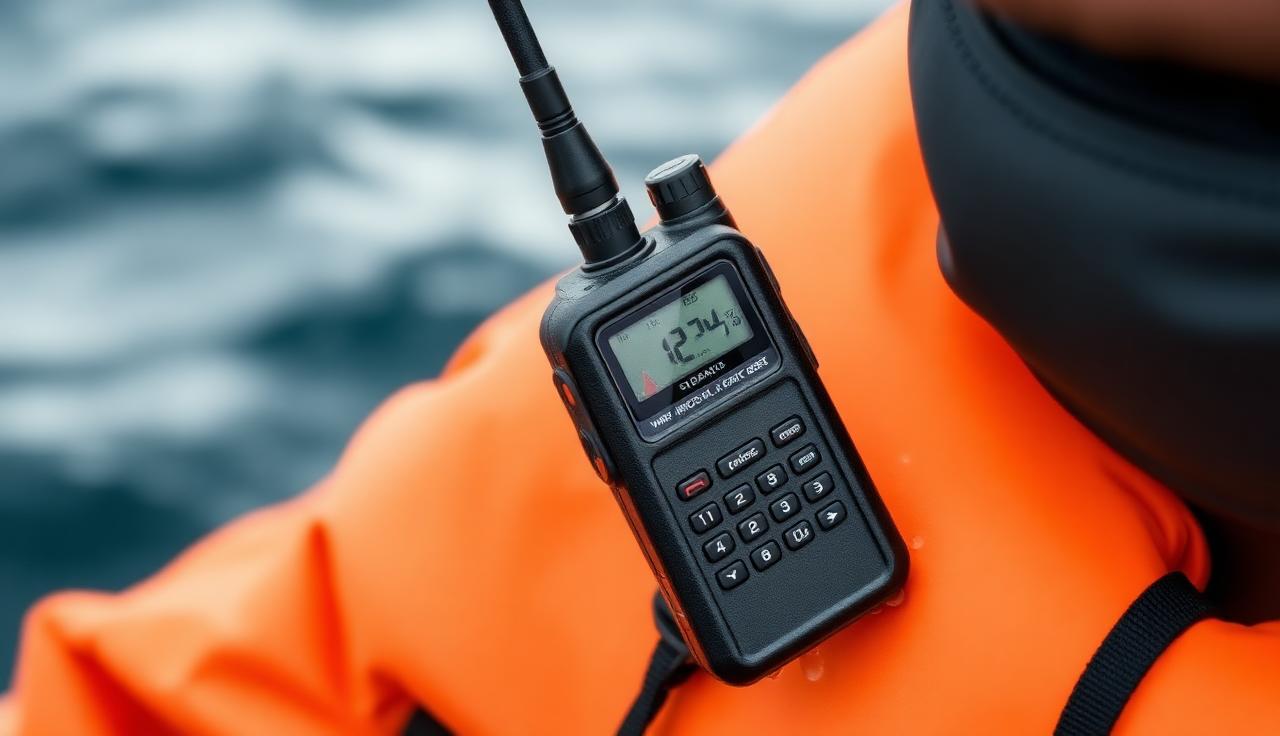
Handhelds output 5–6 watts and reach 5–10 nautical miles. Their job is to be the ditch-bag radio, the dinghy radio, and the backup if the fixed mount fails. Most cruising boats carry both.
Ranges quoted by manufacturers assume both stations have similar antenna heights. Boat-to-boat at the waterline, expect 3–5 nm with a handheld. Boat-to-shore (Coast Guard antennas are mounted very high), expect 15–20 nm with a handheld.
Channel use, in order of importance
Channel 16 (156.800 MHz): International distress, safety, and calling. Monitor it whenever the radio is on. Make initial calls, then immediately switch to a working channel.
Channel 22A: USCG working channel. After calling the Coast Guard on 16, they direct you to 22A for the rest of the conversation.
Channel 9: Recreational hailing alternate. The USCG asks recreational boaters to hail on 9 to keep 16 clear for distress. Many marinas now monitor 9.
Channels 68, 69, 71, 72, 78A: Recreational working channels in US waters. Switch to one of these after hailing.
Channel 13: Bridge-to-bridge for commercial traffic, 1-watt low-power. Monitor in busy commercial waterways for ship-to-ship maneuvering coordination.
Channel 70: Reserved for DSC digital traffic only. Never voice on 70.
DSC and MMSI: the safety upgrade most boaters skip
Digital Selective Calling (DSC) is built into every modern VHF. With your boat's MMSI (Maritime Mobile Service Identity) programmed and the radio connected to GPS, one press of the red distress button transmits your position, identity, and nature of distress to the Coast Guard and every DSC-equipped boat within range.
Get an MMSI free from BoatUS for US-only use, or from the FCC ($220) for international cruising. Program it into the radio per the manual — most radios only let you do this once, so confirm the digits twice before saving.
Connect the radio to your chartplotter via NMEA 0183 or NMEA 2000 so the radio has a continuous GPS feed. Without GPS, the DSC alert sends position 'unknown' — useful but far less actionable.
Mayday vs Pan-Pan vs Sécurité
Mayday: grave and imminent danger to life or vessel. Used for sinking, fire, person overboard, medical emergency. Spoken three times before the message.
Pan-Pan (pronounced 'pahn-pahn'): urgent situation but not immediately life-threatening. Used for engine failure in heavy seas, lost navigation, serious injury without sinking.
Sécurité (pronounced 'say-cure-ee-tay'): safety message. Used by USCG and large vessels to broadcast navigation hazards or weather warnings.
The Mayday script
Press DSC distress button (hold 5 seconds), then voice on Ch 16:
'Mayday, Mayday, Mayday. This is Sailing Vessel Persistence, Persistence, Persistence. Mayday, Sailing Vessel Persistence. Position: 41 degrees 32 minutes north, 70 degrees 48 minutes west. We are on fire and abandoning ship. Four persons on board. Vessel is a 38-foot white sloop. Over.'
The pattern: Mayday × 3, vessel name × 3, Mayday + name once more, position, nature of distress, persons aboard, vessel description, 'Over.' Speak slowly and clearly. Repeat every 2 minutes if no response.
Licensing rules
Recreational boats operating only in US waters do NOT need an FCC license. Marine VHF is license-by-rule.
If you take the boat to international waters or any foreign port, you need a Ship Station License ($160) and a Restricted Operator's Permit ($60) from the FCC. Both are paperwork-only — no exam.
All operators must follow basic radio discipline: no profanity, no music, no false distress, no superfluous communication. The FCC and Coast Guard do enforce these rules and fines run into the thousands.
Frequently asked
Recreational US-flagged boats in US waters do not. International cruisers need a Ship Station License plus a Restricted Operator's Permit — both paperwork-only.